I would have to agree with Ira Shor and her views on educating through political intrigue instead of monotonous spoon fed procedures. The social aspect of teaching and learning is as important as the act itself. To talk about the act of teaching is more thought provoking in itself. Self questioning always is. When we think back to our days at school we don't fondly remember PEMDAS or MLA formatting, rather we remember the relationships and experiences we had with one another. The emotions that our young minds experience echo throughout our lives and shape who we are in the current. Sure grades are a motivator but not to all students in early life. The fact that you got an A on a test felt good but what did that A really mean? Did it influence your decisions this morning or did it help you find out more about your self? In reality it's just a letter that can mean many things and means different things to different people. The act of laughing or a general feeling of happiness is usually achieved through social interaction, a common feeling that we all enjoy, yet schools tend to skip social action in favor of processed information injected through quickest means into our psyche, no matter the danger, because the only thing that matters is that A right? A chart of A's and nice report to the faculty's boss, just so they are assured that paycheck that they struggle to live on. All children want something, sometimes that shapes their future, but more times or not that want warps from the views and teachings of education, from the teacher. It is difficult for even a trace of that spark to come out of Highschool un altered by the standards set forth from standardization, from "what works".
In this reading Shor goes on with a process that I like to call PAPSMDDDRIA, A process in which she breaks down teaching to it's core to respond to the problem of mass produced education.
• Participatory
• Affective
• Problem-posing
• Situated
• Multicultural
• Dialogic
• Desocializing
• Democratic
• Researching
• Interdisciplinary
• Activist
Long story short, Shore explains that participatory learning is important because interaction with the surrounding environment is one of the few ways that someone can truly learn from it. That interaction is the only way to transform the learning environment to your needs and that to not do so leads to being a slave to the education system. To accept your lesson inoculation and taste that sweet cherry "A" lollipop to distract you from the damage that has been done.
Unnatural critical thought as the driver of social change: Steve Joordens at TEDxTrondheim
I recently went to a presentation by Afshan Jafar who discussed to views on Muslim women in a 45 minute lecture. She first handed out scrap paper and asked of us to record our thoughts on what Muslim women are, just three words to describe one half of an entire culture. Most words chosen were beautiful, abused, and secretive and at the end of the exercise she asked us what words would describe a Christen women. We all questioned what kind of Christen woman and from where since there are a lot of variations of the Christianity. Then she said and what of the Muslim women? Don't you think there are more than just one type of Muslim? We all thought about this for a minute and she was right. We just do not have enough of a point of view when it comes to cultures across the see or better yet across our borders. We tend to keep to our selves and assume what it is like out side of our red, white, and blue nest.
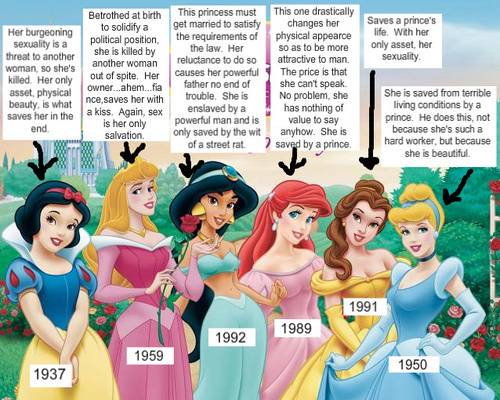
Another topic Afshan talked about is the depiction of Muslims in the Disney movie Aladdin, in which the villain also named Jafar is represented more closely to the image of a Muslim than the main characters who are depicted as Americanized to relate to the viewers but in doing so stigmatizes the true Muslim image. Jasmin in this movie is also not depicted in a traditional burqa and instead seems to wear a belly dancer's outfit, showing off her flared hips and impossibly small waist. In the Opening song of the movie they comment on how barbaric the setting is and how your ear will be cut off if they don't like your face. They later changed it to commenting on the desert but kept the barbaric portion due to complaints.
Original Lyrics: Oh I come from a land, from a far away place, where the
caravan camels roam. Where they cut off your ear if they don't like
your face, it's barbaric, but hey, it's home. When the wind's from the
east, and the sun's from the west and the sand in the glass is right;
come on down, stop on by, hop a carpet and fly to another Arabian night.
Arabian nights, Like Arabian days more often than not are hotter than
hot, in a lot of good ways. Arabian nights, 'neath Arabian moons, a fool
off his guard could fall and fall hard, out there on the dunes.
New
lyrics: Oh I come from a land, from a far away place, where the caravan
camels roam. Where it's flat and immense and the heat is intense, it's
barbaric, but hey, it's home. When the wind's from the east, and the
sun's from the west and the sand in the glass is right; come on down,
stop on by, hop a carpet and fly to another Arabian night. Arabian
nights, Like Arabian days more often than not are hotter than hot, in a
lot of good ways. Arabian nights, 'neath Arabian moons, a fool off his
guard could fall and fall hard, out there on the dunes.
Original Song
After this discussion she moved to another point of interest involving National Geographic. In 1984 Steve McCurry photographed a young Afghan girl who would later become famous in 1985, though no one would know her name for 17 years. National Geographic commented on her eyes and how haunting and haunted the girl was from years of war, though in reality she was pissed that some random white guy was taking a photo of her when she clearly did not want to be photographed. The person who benefited from this photo was McCurry, not the girl that he so rudely photographed and this went on for 17 years until he was asked to go find her. Through eye and jaw analysis the girl was eventually found. Sharbat Gula is her name, now around 30 and she was a victim of generalization by foreigners.
When we think of the burqa we tend to think that women who wear them do not like to, and that they would prefer to be free like many of us Americans, to wear what ever they choose. But in reality they choose to wear their burqas. It is another part of their culture, a part of themselves that they show proudly. Afshan went on to say that our view on what is right is not always right and that other cultures such as the Muslims have different view points.
Overall this lecture was very eye opening to the views of Muslim women in this country and how the media likes to make it American friendly, even if the process strips the truth, poisoning our views on what really is the Muslim way of life.
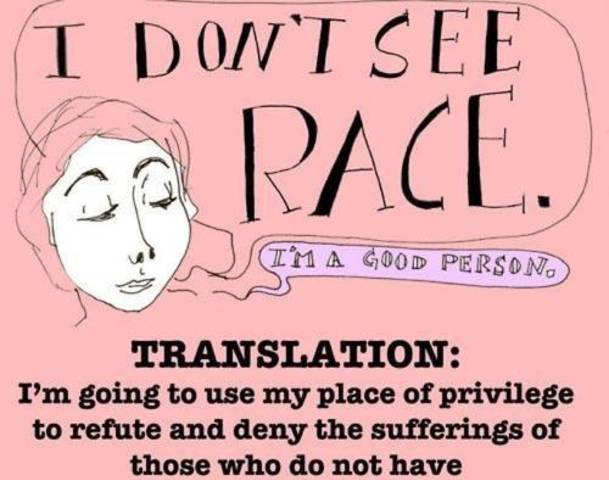
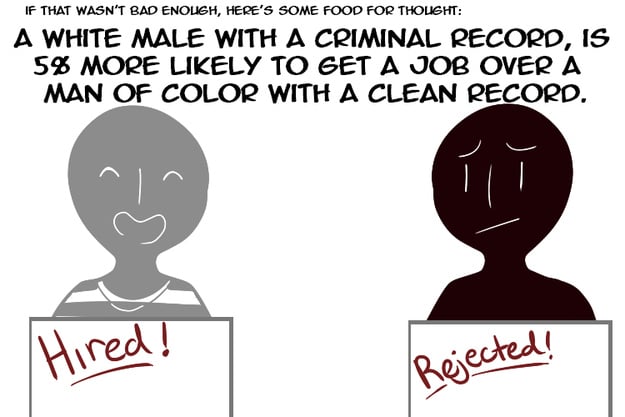
After watching "Between Barack and a Hard Place: Challenging Racism, Privilege and Denial in the Age of Obama" I realized that what I have as a white person was inherited through foul play. How the Whites began their wealth in an age when Blacks, Natives Americans, and Chinese were unable to, setting a ripple that continues today, a momentum of a wealth gap with little signs of slowing down. Because of the amount of time between now and then the mindset of White superiority has been ingrained within the consciousness of the nation to the point where racist thoughts are common place even with non-racists, a Freudian slip sort of speak. A slip of the tongue or thought that enforces the racial biases everyone embodies. For example, when ever a bus full of African Americans arrive at the restaurant that I work at order I always assume that the majority of those customers want some form of chicken, the same with Asians and fish and ect. Why do I think that? Most of the time this is true but at the same time I am subconsciously focusing on the orders that include chicken and fish and in my mind this confirms the stereotype that I was presented even though they might have ordered the same amount of burgers, the fact that they ordered said racial foods overridesthat fact. While this is not a negative thought, well at least I'd hope not, of a certain race, it is still a racially biased thought. These biased thoughts that people have can have more consequencesthan a couple of extra chicken sandwiches, lives can change from biased opinions based on race. White privilege again is an issue, when the blind sentence the seeing based on illusioned conjecture, how can we see this as fair? Again looking back at White Privilege and Power, Blacks are less likely to obtain jobs or degrees based on the color of their skin. Whites have no such obstacles and see everything as fine, as they continue life with little to no speed bumps while the Blacks take the lower unpaved road, a road that was neglected by early society, a road that the Whites did not see to pave, instead paving their own roads with the unwilling help of the Blacks. The highway of society is paved by those with power, White power, taking advantage of the other races to use as labor. This highway that we have now is improving in the ares that need improving but not at an acceptable rate. The momentum set foot centuries ago is slowing down but it will not stop anytime soon.
After reading Christenson's text I feel lied to. As if my entire childhood was a secret training camp to shape me into a racist, sexist American pig. I enjoyed many Disney movies and several cartoons as a child since that was the only thing to distract me from my parent's constant bickering and I can see how the subliminal messages in said cartoons and movies have shaped my perception on how the world supposedly should be. My views on femininity stem from such media as I viewed girly acting women as how they are supposed to act, though I eventually broke out of that train of thought, the thought of a woman taking a mans role seemed strange to me as a child. My ideas about race were also based on the media growing up and that it loosely impacted my thoughts about those of different ethnicites I have encountered, though few when I was growing up. You could say that I was ethnically challenged. The idea of being the "hero" as a child set my standards high, so high that there was no way to reach them and so I thought of my self as weak and insufficient to the world's view. This subconsciously continued through out my early life and aided my medical depression in making me take drastic action against my self, actions that I do not wish to discuss unless you are a therapist in the field of depression and self harm. As I grew older I realized that it was a false view of the way people should be though the thought still persisted on what my perfect self should be, I saw that no one really fit the description of the perfect person and that it was okay to be who you are. This helped a bit while going in and out of high school though other problems at the time still weighed me down.
Like in in White Privilege by McIntosh, Delpit explains the communications block between those with power and those with out it, mainly Whites versus everyone else. White educators have difficulty relating practices and experiences with people of color because they have different experiences and practices. As Delpit put it, "Those with power are frequently least aware of-or least willing to acknowledge-it's existence. Those with less power are often most aware of it's existence." To see the advantages of another race while you your self has to endure lesser or different treatment is much easier than to see a difference when you assume that everyone enjoys the advantages that you enjoy on a day to day basis. Teachers of other colors besides white are sometimes considered to be skills oriented when teaching students. Teachers of the White ethnicity are usually considered to be process oriented as process is what they are used to. A student in Delpit's text complained about a White teacher who used this method, she would have the students write essays then have them correct each others work. The student felt as though he was not learning anything while in another classroom he comments on how a friend has a black teacher who explains in detail the skills and steps in writing a paper. "Neither teachers agreed on each others teaching methods. The cultural and or view barrier is real and it can effect the way students view their teachers. A teacher who just stands for example from the text who seems like she does not know what to do and who assumes that the students should know what to do may look weak and unworthy to the st
udents and this may turn such students off from education. A balance between the several methods of teaching should be shared in group meetings and practices of many kinds should be tried at least once to accommodate for the students. The students attitude is what drives them in the end.
Critical Pedagogy and Teacher Education: Radicalizing Prospective Teachers
In McIntosh's article she describes the advantages of being a white male in this society and I found that most of them do correlate with me and that I did not realize a good portion of them. For example, I have never been harassed by anyone while shopping. This might have to do with the fact that I'm a 6'2" white male as I may look intimidating and or innocent while shopping for shampoo or Old Spice deodorant. The same could not be said for someone of the opposite sex, height, and race. I don't have to be worried about being followed and raped either because the notion of someone doing that to a 6'2" white male seems ridiculous, though it probably rarely happens. So I don't really need to buy pepper spray or a taser to keep those sort of people at bay. Also buying flesh colored bandages threw me off a bit. The more I think about it I realize that I have never seen any shades of brown on a band-aid meant to blend with the skin. In fact I assumed that the band-aids were tan because of tradition more than skin color, because that's how I have always viewed band-aids, as a tan strip off adhesive and padding. I also notice that because there are so many white people in America, it is difficult to not find music or a position in power that includes a white person. In fact, it feels as though I am in an ocean of white with little experience swimming in different waters. It feels as though there is nothing special about me, like I'm just another white male American with certain expectations. The same could be said for others though I do not feel like I have tight group of my race to relate to since my race is diluted, like it's nothing special to see another white person in a Stop and Shop or to see another on the street while walking to the RISD museum. With the good comes the bad and vice versa. While I feel protected by a community full of whites I feel distant from them as well. While I wish everyone had the priveledges I had, I know that change is slow and that the trend of a white dominated society may stay true for many years, probably decades. The paradigm shift from white privelidge to public privilege will happen. It's just a matter of when. And maybe then we will all be judged by our actions rather than our skin color. As McIntosh said "To redesign social
systems we need first to acknowledge their colossal unseen dimensions. The
silences and denials surrounding privilege are the key political tool here." White men in power do not usually acknowledge their privilege. This is because it is invisible to them, because it is the norm for them, because it has never caused a problem for their lives, and so they do not acknowledge it and apply themselves to solving the problem of white privilege, it's not a problem to them, so why would they solve it?
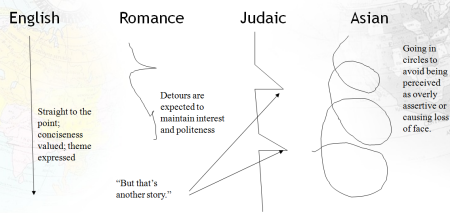
I found the speech patterns in early childhood to be interesting in this reading, how the culture of a family can be so influential in the way a child thinks, reacts, and speaks. Meier conveys the difference in the way several children in similar age ranges spoke and how it is related to their culture. I myself had difficulty speaking as a child as I was quiet and did not really convey language but rather actions. I do not know what that says about me but my sister was very talkative as a child. She would actually sing or play the blame game if she got in trouble, which would rarely happen, and it usually worked. I do not know if this has anything to do with culture as my family does not really have any connections left to our Scandinavian and Slavonic roots. Perhaps it was from watching our mother watch soap operas on the television, perhaps that is why she resorted to her ways of evading trouble. I really can't say, perhaps I was quiet because I preferred to be alone, playing with my legos and ignoring interaction with my family as much as possible, at this time both of my parents were beginning to have marital problems, keeping us up all night with their 10 p.m. yelling while we plunged our heads into our pillows, hoping everything would turn out all right, it did not. Maybe the lack of parenting or the constant chaos of fights and moving had something to do with our disjointing speech patterns. I really can't say.